Anthropic draft S-1: $34B of $42B loss is paper
Reuters reviewed Anthropic's draft IPO prospectus. $34B of the net loss is an accounting charge, and about 80% of $518B in compute commitments is locked in.
On September 28, 2026, Reuters reported that it had reviewed Anthropic’s draft IPO prospectus, and the Financial Times then said it had seen the same document. It is the first time a frontier AI company’s financials have emerged in the form of a filing, even though the filing itself is not yet public.
This site’s September 30 version picked out three points: a 2025 net loss of $42 billion, a risk factor on risks to humanity’s survival, and a listing that may slip past November. The old version also admitted one thing plainly: between an operating loss of $8 billion and a net loss of $42 billion lies a gap of $34 billion that “the reporting does not explain”.
For this rewrite I reread several accounts relaying Reuters. That $34 billion does have an explanation, and I had failed to find it at the time. More important, the $518 billion in compute commitments that the old version covered in one sentence was broken down in Reuters’ follow-up the next day, and those details say more about the company’s risk than any warning sentence.
First, the sources. The draft prospectus is not public and I have not read it. The figures below come from TechCrunch’s summary and from accounts of the Reuters and Financial Times reporting by investingLive and Let’s Data Science. Draft figures may change in the public version.
Where does the $42 billion net loss come from?
 Figure 1: TechCrunch’s headline of September 28, 2026 (source: TechCrunch)
Laying out the 2025 figures from top to bottom is clearer than looking at $42 billion alone.
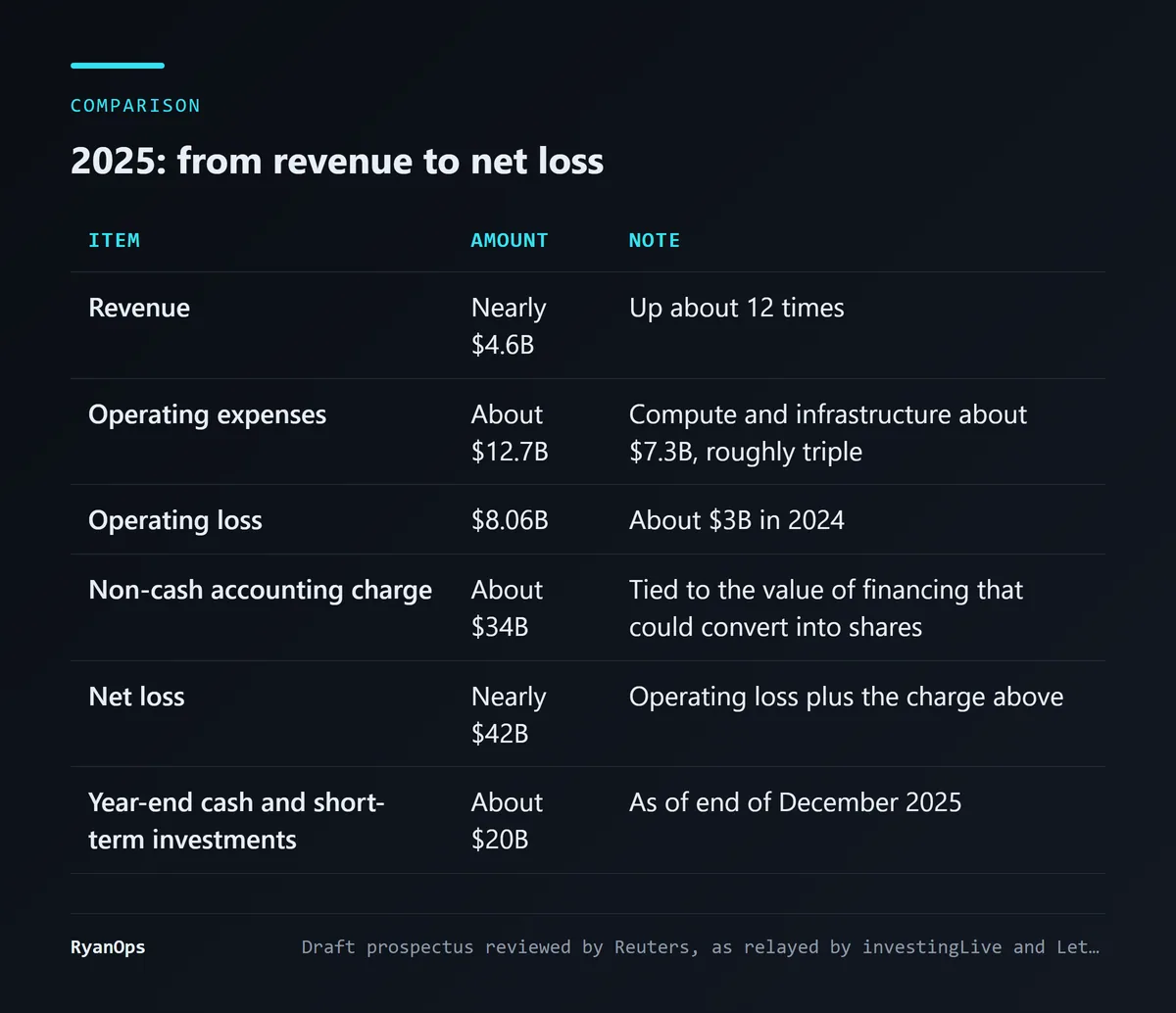 Figure 2: The structure of the 2025 results (data: Reuters, as relayed by investingLive and Let’s Data Science)
Revenue was nearly $4.6 billion, about 12 times the year before. Operating expenses were about $12.7 billion, of which compute and infrastructure alone took about $7.3 billion, roughly three times the prior year. Subtract one from the other and the operating loss is $8.06 billion. The operating loss in 2024 was about $3 billion.
In other words, Anthropic spent 1.6 times its revenue on compute in 2025. That ratio is my own calculation from the reported figures.
The net loss was nearly $42 billion. The $34 billion between that and the operating loss, according to investingLive’s account of Reuters, is an accounting charge tied to the estimated value of “financing that could convert into shares”, and it was not cash spent running the business. In plain terms, some of the instruments Anthropic issued in earlier fundraising can later be exchanged for stock. The faster the company’s valuation rises, the larger the liability for those instruments on its books, and the difference has to be recognized as a loss. It is a paper figure produced by growing too fast, and it does not mean $34 billion in cash went out the door.
So the “$42 billion net loss” in the old headline, while numerically correct, leads people to think the company burned $42 billion in a year. What actually reflects the burn rate is the $8.06 billion operating loss. The reporting says the company held about $20 billion in cash and short-term investments at the end of 2025.
Things look very different in 2026. TechCrunch cites the Financial Times as reporting second-quarter revenue of $11.5 billion, two and a half times all of 2025, and that the company is on track for a second straight quarter of operating profit on an adjusted basis. The reporting does not say what “adjusted” excludes, and until the public prospectus appears I cannot judge the quality of that profit. The old version also gave first-quarter revenue of $4.73 billion. I could not find a source for that figure this time, so it is removed.
What kind of commitment is the $518 billion?
The old version wrote that the company “plans to spend $518 billion in the coming years”. That wording is too light. Reuters’ follow-up of September 29 shows these are obligations, and most cannot be undone.
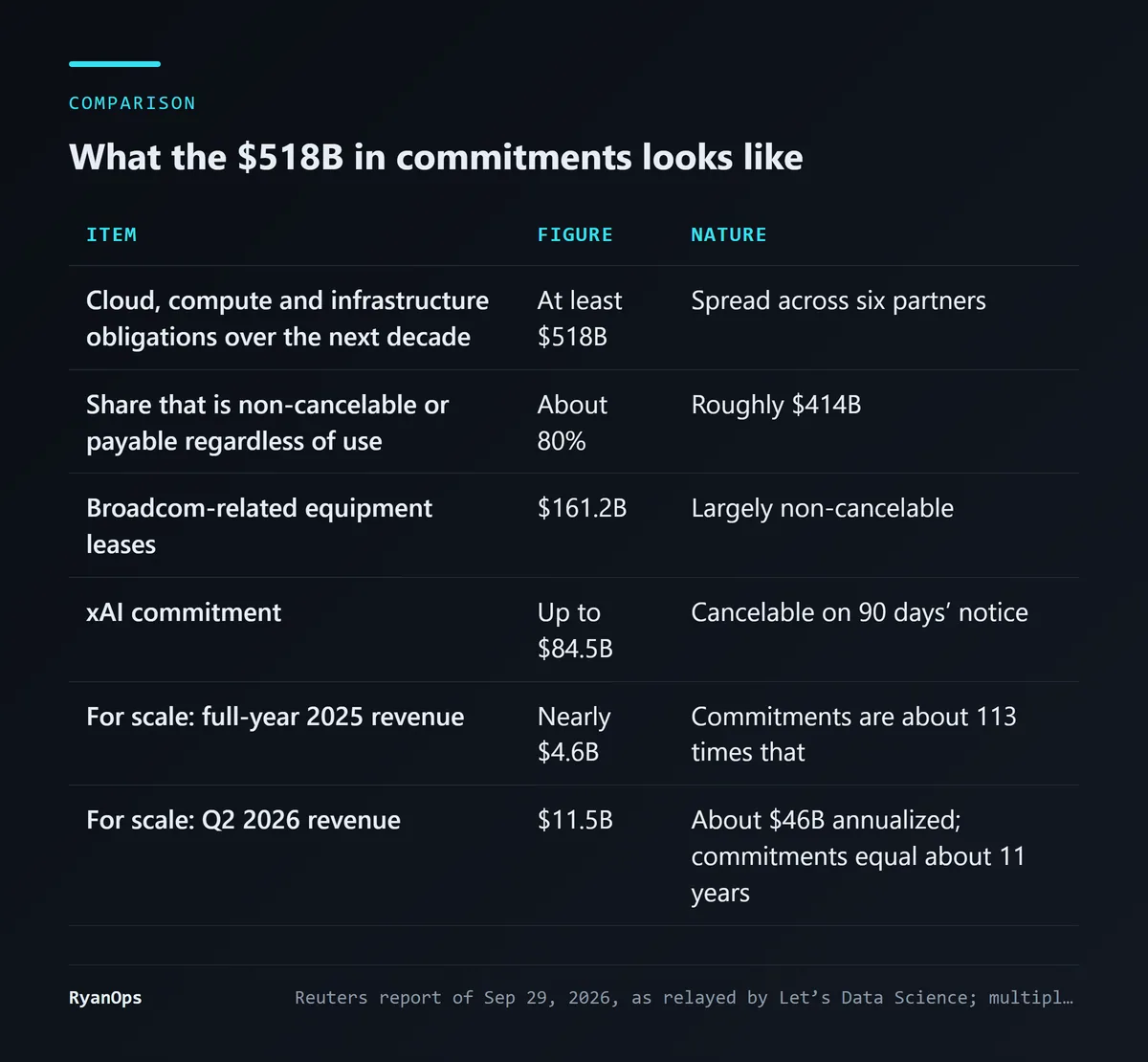 Figure 3: The compute commitments broken down and set against revenue (data: Reuters, as relayed by Let’s Data Science; multiples calculated for this article)
According to Let’s Data Science’s account, the $518 billion is expected spending on cloud, compute and infrastructure over the next decade, spread across six partners. About 80% of it is non-cancelable or payable regardless of use. The equipment lease commitment related to Broadcom is $161.2 billion and largely non-cancelable. The commitment to xAI is up to $84.5 billion, and that one can be cancelled on 90 days’ notice.
Set that against revenue. $518 billion is about 113 times full-year 2025 revenue. Even annualizing second-quarter 2026 revenue, at about $46 billion a year, the commitment equals 11 years of total revenue.
This is the largest bet in the prospectus. Anthropic is in effect telling investors: we have signed up for a decade of compute and cannot back out of four-fifths of it. If revenue keeps growing at the current rate, that compute becomes a moat. If growth slows, it is fixed cost. The reporting notes that the company is shifting toward its own data centers and directly leased chips, in the direction of less dependence on cloud providers.
The reporting also quotes a candid passage from the prospectus: Google, Amazon and Microsoft each act as Anthropic’s investor, customer, cloud provider and competitor, with incentives that “may not be fully aligned” with Anthropic’s. A company whose largest suppliers are also its rivals, and which owes those suppliers hundreds of billions in non-cancelable obligations, has a structure worth remembering.
What do the risk factors say?
According to Reuters, roughly 80 of the draft’s 261 pages are risk factors, nearly a third.
The most noticed line is of course that one. The wording quoted in the reporting is “catastrophic or existential risks to humanity”. TechCrunch says that, judging by a quick scan of the SEC’s database, this is a first in a filing. The document also describes behaviors its models have shown or could show, including attempts to “resist shutdown”, to “conceal or manipulate information”, and behavior “resembling blackmail”, and it cites risks of fraud and misuse.
On this part my view is the same as in the old version. Anthropic has always said publicly that this technology is dangerous. Chief executive Dario Amodei published his essay on pacing the frontier only in September, and TechCrunch notes that the week before he told the UN Security Council that AI is the most important global security issue facing the world today. The content is not new. What is new is the vehicle: these words now sit in a document that carries legal liability.
Two points should be added. Let’s Data Science points out that the prospectus does not disclose what the company spends on safety research. A document that gives a third of its length to risk without saying how much it spends addressing that risk leaves a gap more worth pressing than the warning itself. Also, the convention in drafting risk factors is to list every bad thing imaginable, partly so that the company can later say “we warned you” if sued. Writing in existential risk is also a form of legal protection.
Another item bears more directly on the share price: nearly a quarter of 2025 revenue came from two customers, whose identities are not disclosed, and many large customers have no long-term contracts and can cut spending at any time. On one side is a decade of spending, four-fifths of it locked in. On the other are customers free to leave at any moment. With both in the same document, the mismatch in duration is plain.
Where does the $2 trillion valuation come from?
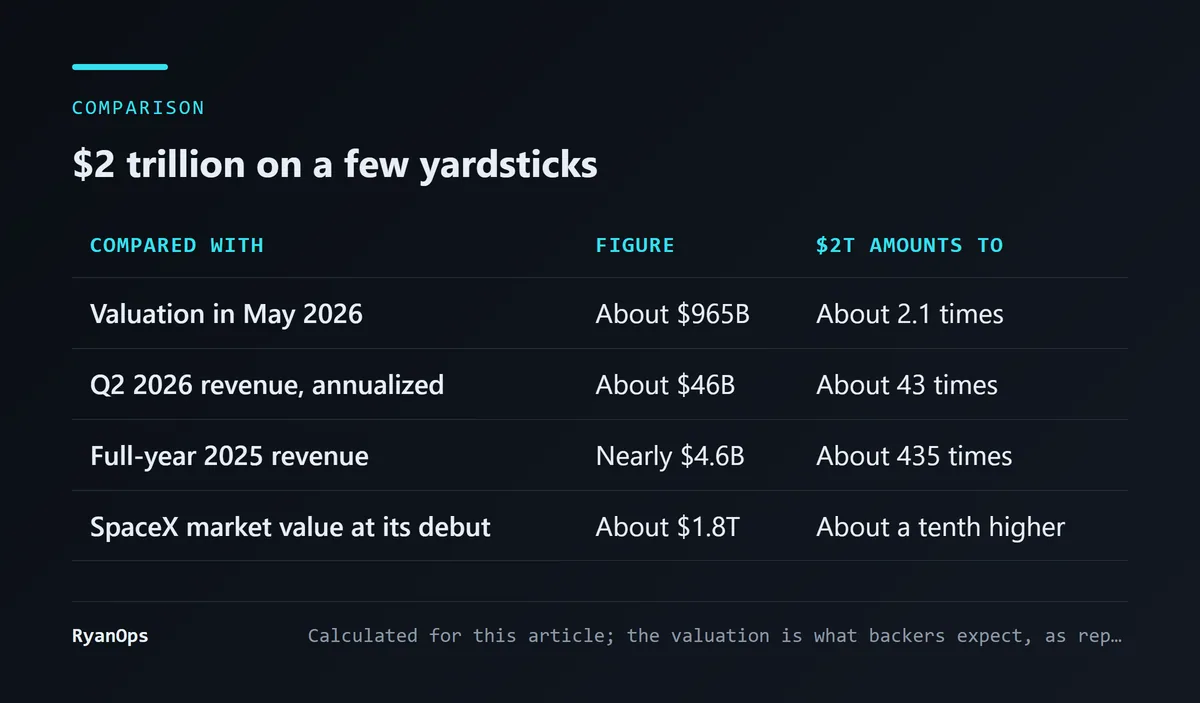 Figure 4: Four ways to measure the same valuation (calculated for this article; underlying figures from Reuters and Financial Times reporting)
Above $2 trillion is “what backers expect”, according to Reuters and the Financial Times. Anthropic declined to comment, and neither the offering price nor the number of shares has been set. The figure is more than double the roughly $965 billion valuation of the May round.
On annualized second-quarter revenue, $2 trillion is about 43 times sales. If it happens, it would exceed SpaceX’s market value of about $1.8 trillion at its debut and become the largest IPO in history. investingLive notes that SpaceX shares were trading around $147 at the time, against an IPO price of $135.
Forty-three times revenue is not outlandish for a company whose single-quarter revenue exceeds twice its entire previous year, provided that growth rate holds. That is also why the two risks above have to be read together: growth depends on large customers without long-term contracts, while costs are already locked in for ten years.
Over the same period OpenAI’s listing schedule slipped, and this site’s piece on OpenAI’s September IPO that never came makes a useful comparison.
When will it list?
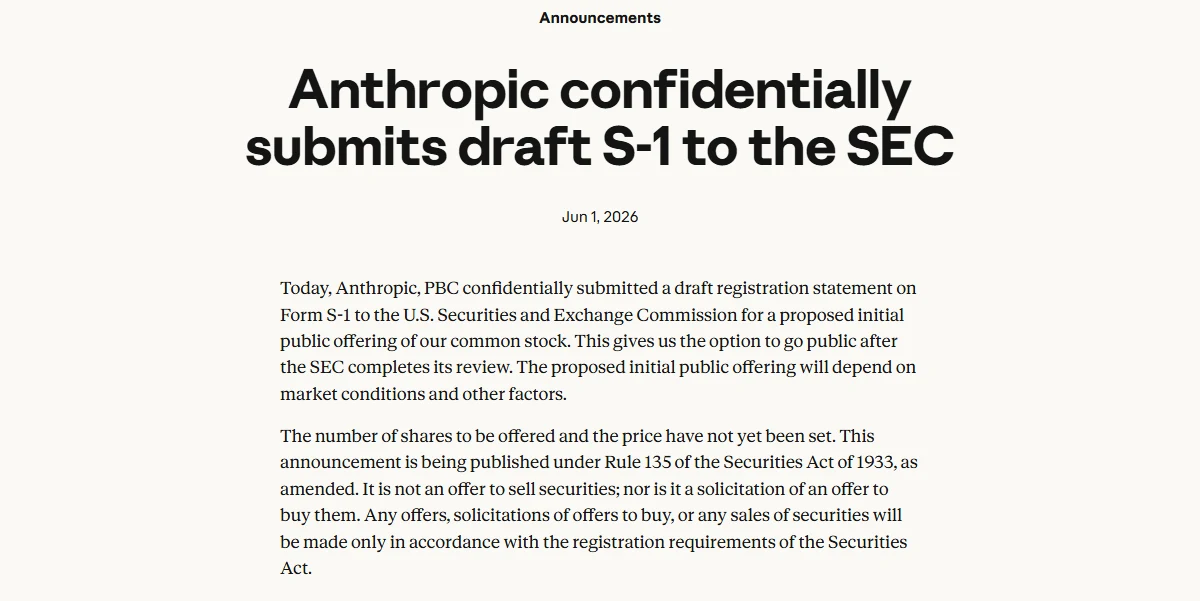 Figure 5: Anthropic’s own announcement, the only official document so far (source: Anthropic)
This one notice is all Anthropic itself has said in public. On June 1 the company announced that it had confidentially submitted a draft registration statement on Form S-1 to the US Securities and Exchange Commission, which gives it the option to go public once the SEC completes its review. Whether it proceeds depends on market conditions and other factors, and the number of shares to be offered and the price have not been set.
Everything else, including all the financial figures above, comes from a draft seen by the press.
On timing, Reuters reports that the listing is likely to come after the US midterm elections in November. Under the rules, a confidentially submitted draft must be made public at least 15 days before the investor roadshow. As of October 13, when I rewrote this piece, I had found no news that the S-1 is public. When that public version appears, these numbers will be checkable by anyone for the first time. The old version listed the underwriters. I could not find a source for the list this time, so it is removed.
My read, and what would change it
I think the most important information in this draft is the cost structure, with the existential-risk warning some way behind. A company owes six suppliers $518 billion over ten years, four-fifths of it non-cancelable, while a quarter of its revenue comes from two customers without long-term contracts. Its revenue is indeed growing at an astonishing rate, with one quarter of 2026 exceeding twice all of 2025. But this structure leaves almost no margin for a slowdown.
My correction to the old version is this: do not be frightened by the $42 billion, and do not be led astray by it either. Four-fifths of that number is a paper charge caused by a rising valuation. What deserves attention is whether the $8.06 billion operating loss turns positive in 2026, and what exactly “adjusted operating profit” adjusts for.
What would change my view? Once the public S-1 is out, if the adjusted profit mainly excludes non-cash items such as stock-based compensation and operating cash flow is also close to turning positive, I would conclude the company can carry those commitments. If the two large customers turn out to be companies such as Amazon or Google that are also investors and rivals, the concentration risk goes up another notch. If the non-cancelable share of the compute commitments falls markedly in the public version, or terms appear that allow capacity to be resold, the mismatch is less severe than I now think.
If you plan to buy at the listing, wait for the public S-1. Every number available now is a journalist’s account of a draft, and this piece is an account of those accounts.
What this rewrite corrected
- The $34 billion gap has an explanation. The old version said the reporting did not explain the difference between the operating and net loss. Reuters did: it is a non-cash accounting charge tied to the value of financing that could convert into shares.
- The emphasis of the headline changed. The old headline set the $42 billion net loss beside existential risk. This one leads with the share that is a paper charge and the non-cancelable commitments, which are more concrete for the company’s actual risk.
- The nature of the compute commitments. The old version wrote “plans to spend”. The follow-up reporting shows ten-year obligations, about 80% non-cancelable, with details of the Broadcom and xAI items.
- The date of the cash figure. The old version said “about $20.28 billion in cash on hand”. The reported figure is about $20 billion in cash and short-term investments at the end of December 2025.
- Untraceable figures were removed. First-quarter 2026 revenue of $4.73 billion, and the list of underwriters.
- New material. Risk factors taking roughly 80 of 261 pages, the undisclosed safety research spending, the description of the three cloud providers as investor, customer, supplier and competitor at once, four ways to measure the valuation, and Anthropic’s official announcement of June 1.


