2027 memory 'sold out': Micron margin hits 86.8%
DigiTimes said in August that 2027 DRAM and HBM capacity was fully allocated. Earnings since back the direction, but the makers are expanding.
In early August 2026, DigiTimes reported, citing industry sources, that Samsung, SK hynix and Micron had allocated all of their DRAM and HBM capacity for 2027. When this site wrote about it on September 11, all it had was that anonymously sourced report plus one forecast from SK hynix’s chief executive.
A month later the picture is different. Micron reported earnings on September 30 and Samsung published preliminary results on October 8, and both are the companies’ own numbers. For this rewrite I set those two reports against the story and went back over every statement the old version cited. One argument has to be changed entirely. The old version said the big three had learned from history and would “raise prices sooner than expand”. In fact all three are expanding heavily. The new capacity simply cannot arrive in time for 2027.
Who first said 2027 would be short?
The order of events needs sorting out first. The old version made the SK hynix chief executive’s words read like a response to the DigiTimes report. They came nearly a month earlier.
 Figure 1: The Reuters interview as carried by Gulf Times on July 11, 2026 (source: Gulf Times)
On July 10, SK hynix listed on Nasdaq. Chief executive Kwak Noh-jung gave Reuters an interview that day, and his words were: “We forecast that next year will be the worst year in the industry’s history from the supply perspective.” He went on: “Our customer demand continues to go up, while our capacity has limitations,” and forecast that customer demand would stay above the company’s supply capacity “even beyond 2030”.
The setting matters when reading this. It is a chief executive, on the day his company lists in the United States, telling investors that its products will be in short supply for years. That does not make him wrong, but he had every reason to sound optimistic.
The DigiTimes report appeared in early August. The original is behind a paywall, and this time I could not open TweakTown’s page relaying it either (a bot check blocked it). What follows relies on IT-Daily’s account of August 10. The big three have committed all of their 2027 DRAM and HBM capacity, leaving new buyers almost nothing. Makers are signing supply agreements of up to five years with customers. NAND capacity for 2027 was still available at the time but could be fully booked by the end of August. IT-Daily also notes that the report cites unnamed industry sources and does not say which customers secured the allocations.
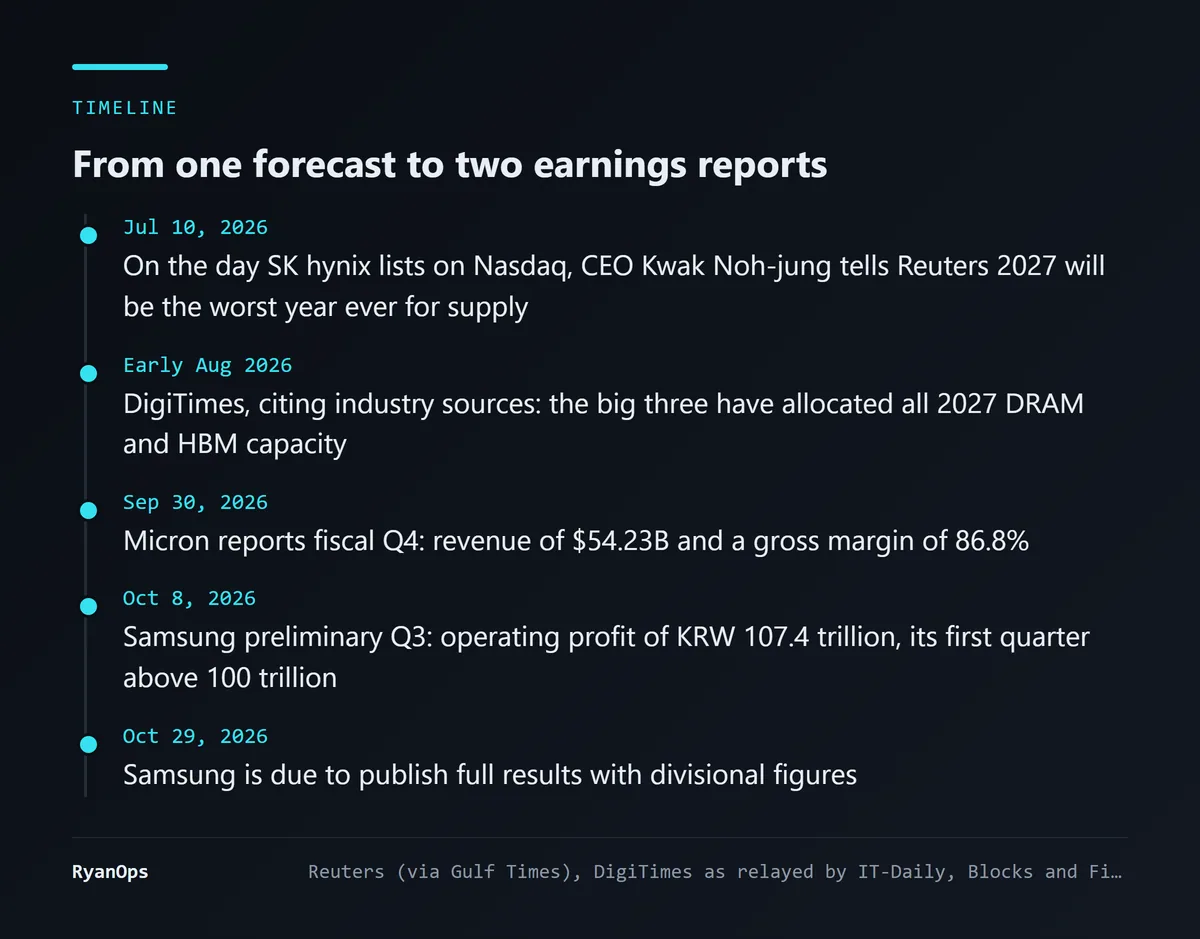 Figure 2: Five points from forecast to earnings (data: Gulf Times, IT-Daily, Blocks and Files, TrendForce)
The phrase “sold out” calls for some reserve. None of the three companies has confirmed it publicly in those words. Micron’s wording in its earnings commentary is more precise, as the next section shows: it says supply will stay tight, and that a large share of its revenue is already locked in by long-term agreements.
Two months on, what do the earnings say?
If capacity really has been snapped up, a seller’s results should show two things: sharply higher prices, and customers willing to pay cash in advance. Micron’s results show both.
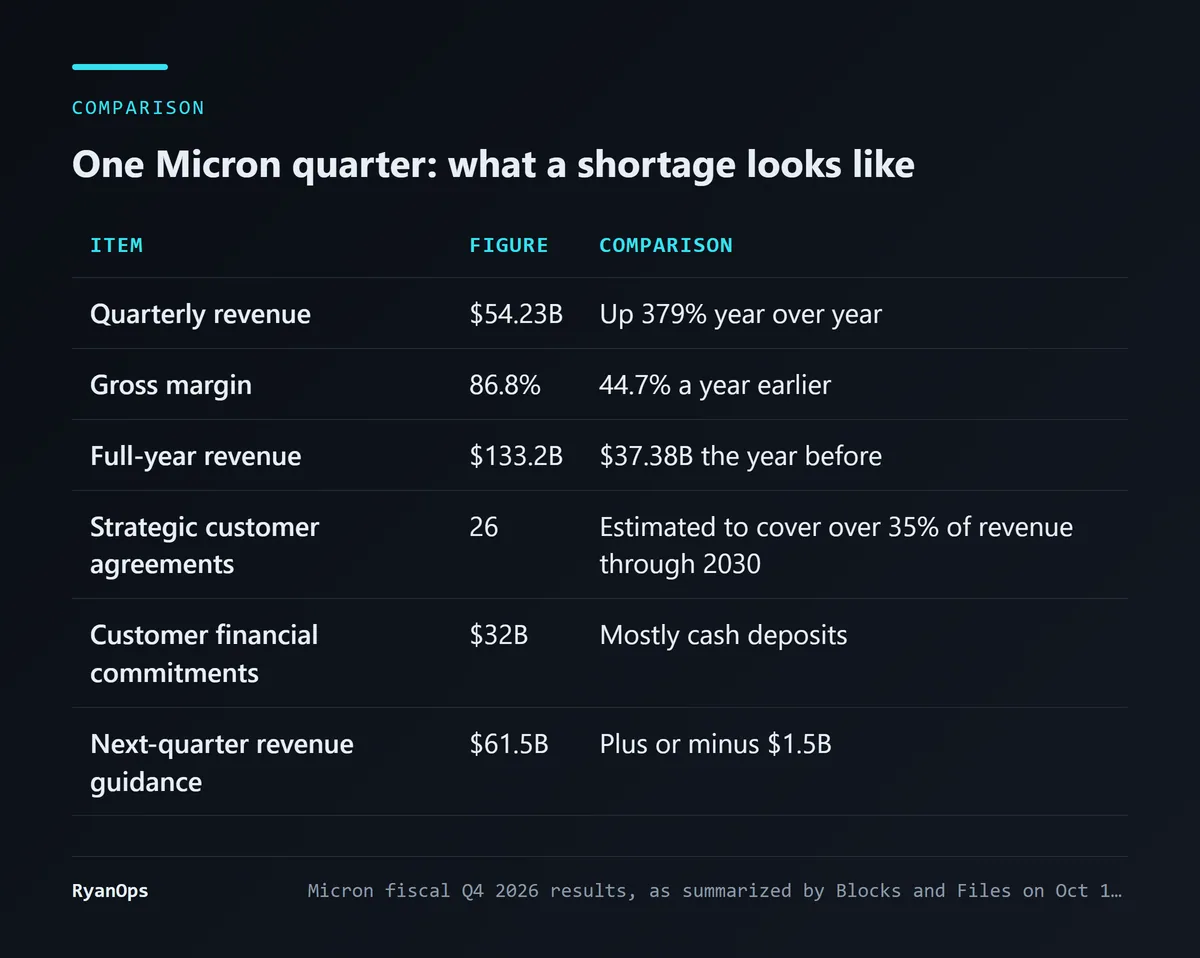 Figure 3: A few numbers from Micron’s quarter (data: Blocks and Files)
Quarterly revenue was $54.23 billion, up 379% from a year earlier and above the company’s own earlier guidance of around $50 billion. Full-year revenue was $133.2 billion, against $37.38 billion the year before.
Gross margin says the most. A year ago it was 44.7%, and this quarter it is 86.8%. Memory is a standardized commodity, and same-specification parts from different makers are nearly interchangeable, so margins do not look like this in a normal year. A margin that nearly doubles means the same chips sell for much more while costs have not risen with them, and that only happens when buyers are scrambling for supply.
The other two rows are information the old version did not have. Micron says it has signed 26 strategic customer agreements, which it estimates cover over 35% of revenue through 2030, and that customer financial commitments have reached $32 billion, mostly as cash deposits. This is what the “agreements of up to five years” in the DigiTimes report look like in a set of accounts: customers put money in first, in exchange for allocations over the coming years.
On what comes next, Micron says memory and storage supply will stay tight through fiscal 2027 and 2028, and that it has no clear view of when supply and demand will balance.
Samsung’s numbers came a week later.
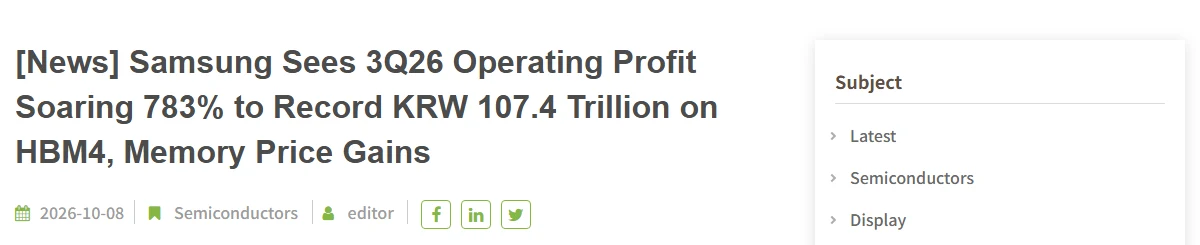 Figure 4: Coverage of Samsung’s preliminary third-quarter results (source: TrendForce)
According to TrendForce’s summary, Samsung’s consolidated operating profit for the third quarter was KRW 107.4 trillion, up 782.5% year over year and its first quarter above 100 trillion, on revenue of KRW 195 trillion. Korean media point out that this single quarter’s operating profit exceeds Samsung’s 2025 full-year figure of 43.6 trillion. Preliminary results carry no divisional numbers, and the full report is due on October 29, so how much the memory business earned is still only a brokerage estimate. TrendForce relays Reuters as saying both Samsung and Micron expect memory supply to remain tight through 2028.
On prices, TrendForce’s estimate in early October is that DRAM contract prices will rise 10% to 15% quarter over quarter in the fourth quarter of 2026, and NAND 15% to 20%.
These two reports cannot directly prove that “not one chip of 2027 capacity is left”. The only source for that remains anonymous. What they do prove is the direction: prices, margins and prepayments all point to a severe shortage, and the sellers think it will last more than two years.
Are the makers really not expanding?
The old version spent a whole section explaining why the big three would not build new fabs, saying they had been burned by past cycles and had learned the discipline of “do not expand at the peak”. The reasoning reads smoothly. Unfortunately it does not match the facts.
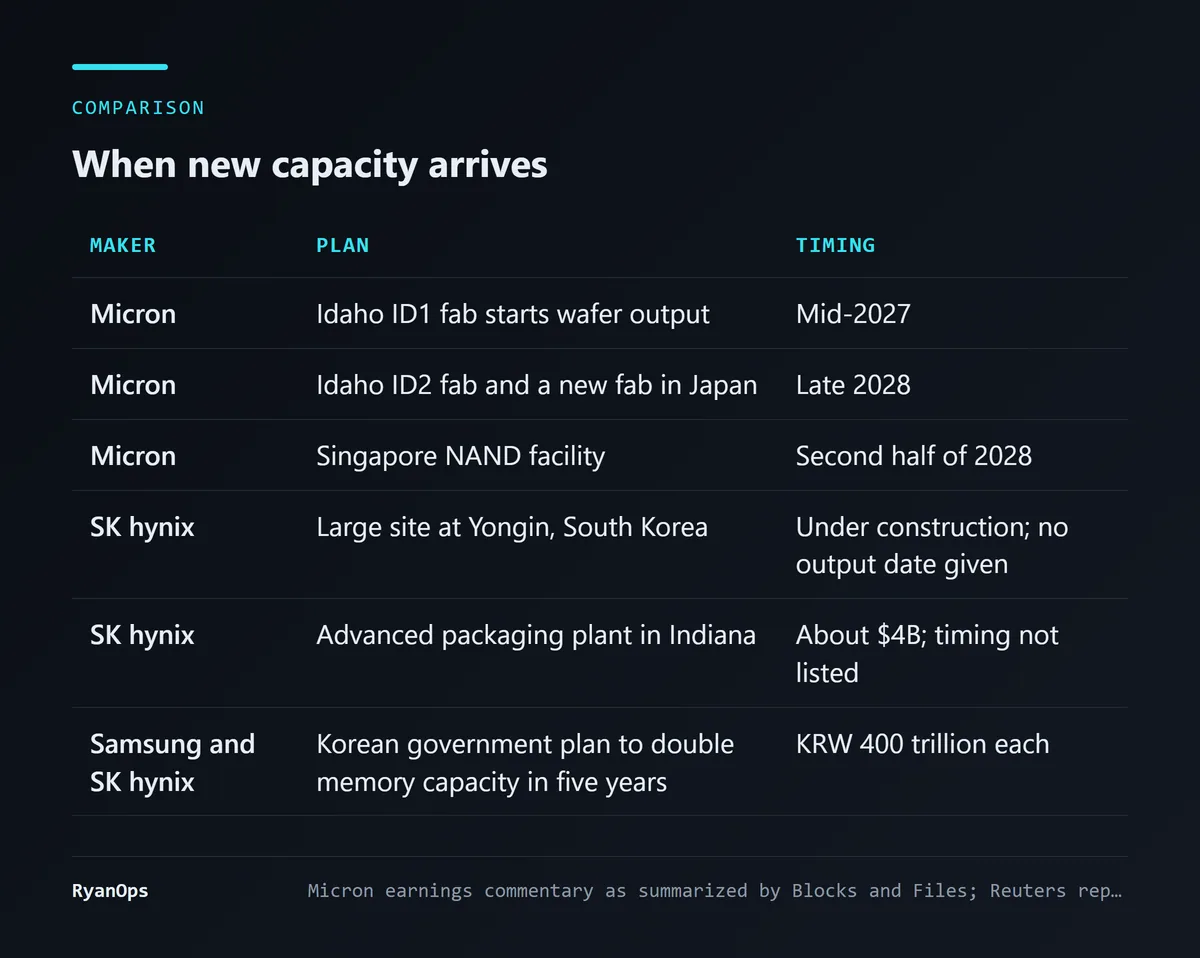 Figure 5: Expansion plans the three makers have disclosed (data: Blocks and Files, Reuters via Gulf Times)
Micron says its capital expenditure for fiscal 2027 will be higher than previously planned, with the increase going mainly to construction. Its ID1 fab in Idaho is expected to start wafer output in mid-2027, the ID2 fab and a new fab in Japan in late 2028, and a NAND facility in Singapore in the second half of 2028. The Reuters report from July also notes that Micron plans to invest over $250 billion in the United States through 2035, up from the $200 billion it gave before.
As for SK hynix, the first paragraph of the Reuters report says demand will exceed supply “despite aggressive capacity expansion”. The items it lists include a large site under construction at Yongin in South Korea and an advanced packaging plant in Indiana costing about $4 billion. One item is larger still: the Korean government has a plan to double memory capacity within five years, with SK hynix and Samsung each to put in KRW 400 trillion, about $266 billion.
So the reality is that all three are expanding, and aggressively. When DigiTimes says there is “no additional capacity”, it means that for the year 2027 it is already too late. A leading-edge memory fab takes years from groundbreaking to volume production. The earliest new capacity in Figure 5 arrives in mid-2027, and most of it lands in late 2028. Kwak’s statement that 2027 will be the worst fits this schedule: demand is still rising, and the new fabs are not yet running.
The cycle the old version described has not gone away. It has moved. The risk lies in 2028 and 2029, when these new fabs come on stream together. The Reuters report mentions that some investors worry the Korean doubling plan would expose makers to greater risk when the cycle turns. When the report ran, SK hynix shares had fallen 18% over the previous two weeks, though they were still up more than sevenfold over 12 months.
Where did the capacity go?
HBM is the high-bandwidth memory fitted to AI accelerators, and the glossary has an entry on GPU, TPU and HBM. It is made by stacking ordinary DRAM dies vertically, and it uses the same wafer capacity. Each additional HBM stack means somewhat less DRAM for laptops and phones.
The headline of a TrendForce item from late September says Samsung expects HBM to take nearly 30% of the industry’s DRAM capacity in 2027, against about 20% now. I saw only the headline and did not read the body, so treat that figure as a direction. HostZealot, another outlet relaying DigiTimes, says servers plus HBM are expected to make up about 70% of DRAM shipments in 2027, leaving roughly 30% for PCs, phones and consumer electronics. The same piece cites an unnamed analyst estimate that makers will meet only 60% to 70% of total demand in 2027. None of these ratios has an original source I can name. I list them because they agree with one another in direction, and the individual numbers should not be leaned on.
For who the buyers are, the Reuters report gives an order of magnitude. Bank of America estimates hyperscaler capital expenditure at about $851 billion this year and about $1.15 trillion next year. Against that, a 20% or 30% rise in memory prices is not enough to make them cancel orders. In past memory price rises, phone and PC buyers pulled back first and prices then eased. This time the largest buyers are not very price-sensitive, and that brake is not working for now.
Chinese makers are affected more directly. Another piece on this site covers DeepSeek’s plan to deploy 160,000 Huawei chips, where Huawei’s output is held back by advanced memory.
What does this mean for ordinary buyers?
The old version gave several pieces of advice in this section, including “if you want to upgrade memory or an SSD, doing it now is better than next year”. I still agree with the direction, and the grounds are stronger than a month ago: fourth-quarter contract prices are still rising, and the sellers expect tightness through 2028. But I should add something the old version did not say. I do not know how much retail prices will rise. Contract prices are what large customers negotiate with the makers. They reach retail channels with a lag, and not necessarily by the same amount.
What is more certain is that phone and laptop makers face cost pressure. They commonly respond in one of two ways: raise prices, or hold the price and reduce the memory in the base model. There is already an example. In August this site covered how the Pixel 11 line went up $100 while the Pro lost 4GB of memory. Comparing the specification sheets of successive generations before buying tells you more than the price tag does.
The old version also said memory-heavy cloud instances might get more expensive and that the second-hand memory market would heat up. Both are reasonable guesses, but I found no data to support them this time, so I keep them here only as reminders and not as conclusions.
My read, and what would change it
I think the judgment that “memory will be severely short in 2027” now has enough evidence behind it. It began as a chief executive speaking on listing day and one anonymously sourced report. It now has Micron’s 86.8% gross margin, $32 billion in customer prepayments, and Samsung’s operating profit passing KRW 100 trillion in a quarter. I still hold back on “not one chip left”, because no company has said so.
Where I disagree with the old version is “the makers are not expanding”. All three are, with new capacity concentrated between mid-2027 and late 2028. That makes the risk structure the reverse of what the old version described: the short-term problem is that you cannot buy it, and the medium-term problem may be that there is too much.
What would change my view? If the hyperscalers cut capital expenditure in their earnings over the next few quarters, the shortage would end sooner than anyone expects, and those prepaid long-term agreements would turn into a burden for buyers. If Samsung’s full results on October 29 show the memory business earning far less than brokerages estimate, I would revise “the whole industry is short” to “HBM is short and the rest less so”. If Micron’s ID1 fab comes on stream as scheduled in mid-2027 and contract prices are still rising by double digits, then Kwak’s “beyond 2030” would be more credible than I now think.
What this rewrite corrected
- “Not expanding” was wrong. The old version said the big three had no plans to add output and would raise prices sooner than expand. Micron has raised capital expenditure, with new fabs producing from mid-2027 to late 2028, and SK hynix and Samsung are part of Korea’s plan to double capacity in five years. Only 2027 is too late.
- The timing and setting of Kwak’s remark. He said it to Reuters on July 10, the day SK hynix listed on Nasdaq, nearly a month before the DigiTimes report. The old version did not say so.
- The date of the DigiTimes report. It appeared in early August. The old version read as though it were September news.
- Source limits. I have not read the DigiTimes original behind the paywall, and TweakTown’s page could not be opened this time. The content relies on accounts by IT-Daily and HostZealot.
- The closing “coincidence” was removed. The old version set model price cuts in the same week next to memory capacity being locked up. There is no verifiable link between the two.
- New material. Micron’s and Samsung’s earnings figures, the 26 long-term agreements and $32 billion in prepayments, fourth-quarter contract price estimates, the expansion schedule, the scale of hyperscaler capital expenditure, and the Pixel 11 as an example that has already happened.


