DeepSeek's 160,000 Huawei chips: 53-80% of a year
Bloomberg says DeepSeek plans at least 160,000 Huawei Ascend 950DT chips for inference. The $2.6B figure is not in the report; Huang spoke months earlier.
On September 4, 2026, Bloomberg reported, citing people familiar with the matter, that DeepSeek plans to deploy at least 160,000 Huawei Ascend 950DT chips at a data center it is building in Ulanqab, Inner Mongolia. The news was quickly retold as “a Chinese AI company abandons NVIDIA”. This site’s September 9 version ran with that framing too, and attached a total price of $2.6 billion.
For this rewrite I went back through the sources, and the conclusion is far more cautious than the old one. The report describes a purchase plan for inference, with training staying on NVIDIA. The $2.6 billion is not in Bloomberg’s report. Jensen Huang’s line about conceding China to Huawei was said three and a half months earlier and has no causal link to this order. The number that deserves attention is a different one: 160,000 chips is roughly half to four-fifths of what Huawei can make of this chip this year.
What did Bloomberg actually report?
Bloomberg’s article sits behind a paywall and I have not read the full text. What follows comes from two outlets that each relayed the report: the Japanese tech site XenoSpectrum and the telecom trade outlet Mobile World Live. Here is where the two agree.
DeepSeek intends to deploy “at least” 160,000 Ascend 950DT chips in Ulanqab. The chips are for inference only, meaning the computation that answers user requests once a model has been trained. Mobile World Live puts it as DeepSeek “doesn’t currently plan” to use the 950DT for training. Huawei does not have the capacity to deliver in one batch, delivery could take more than a year, and DeepSeek has asked Beijing to step in so that Huawei allocates it more chips, sooner. Neither DeepSeek nor Huawei commented on the record.
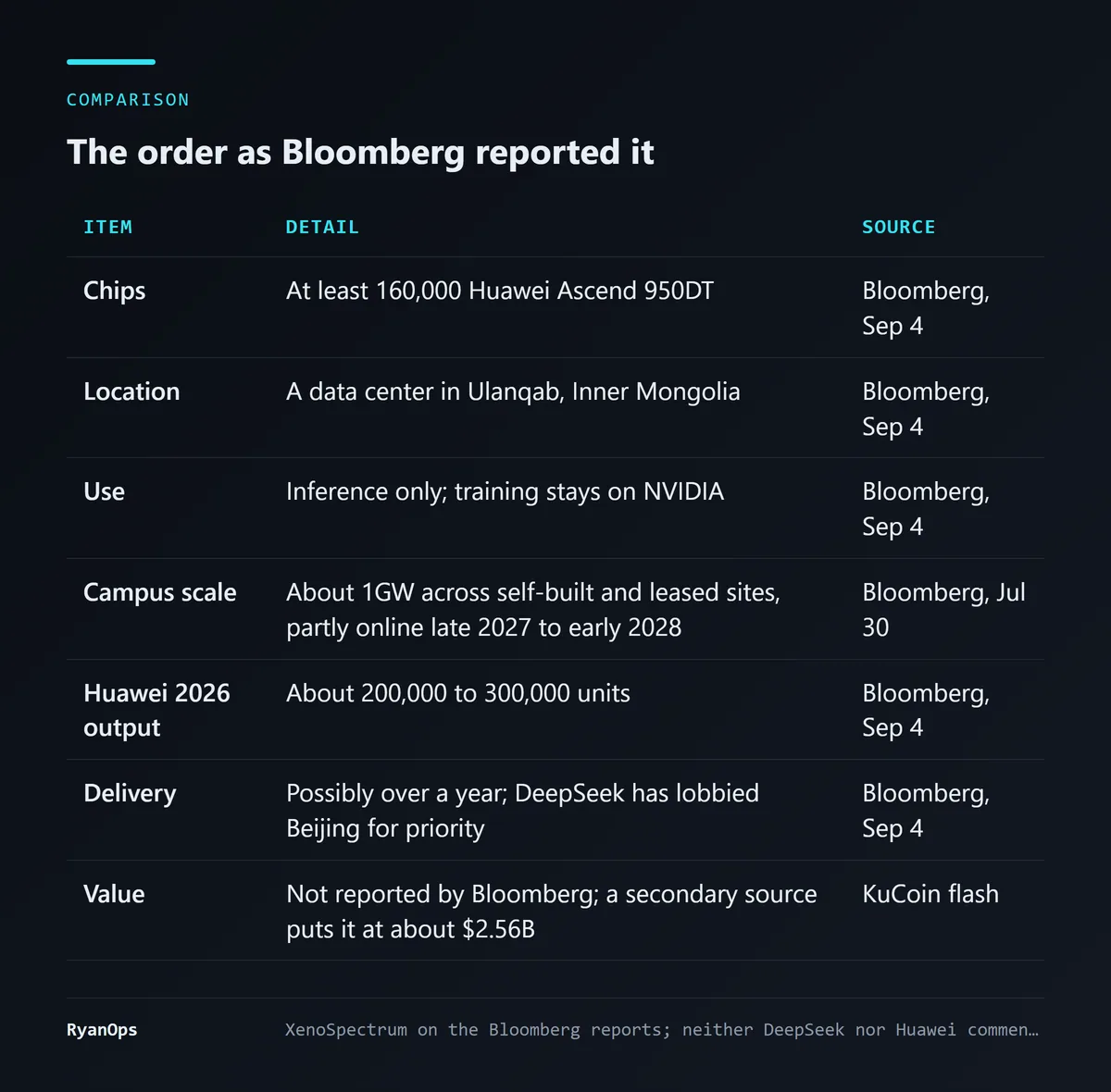 Figure 1: The order as it emerges from two Bloomberg reports; the value in the last row does not come from Bloomberg (data: XenoSpectrum)
Two details often get blended. First, the “1GW” campus scale comes from a separate Bloomberg report on July 30. It describes total capacity across self-built and leased sites, with part of it meant to come online between late 2027 and early 2028. The September 4 report added the chip model and the count. Second, 160,000 chips and 1GW are independent numbers. No source says the 160,000 chips fill the 1GW.
One more premise to keep in mind: this is a plan. The report’s word is “plans”, the sources are anonymous, and neither side has confirmed it. As of October 13, when I rewrote this piece, I could find no follow-up at all: no contract announcement, no delivery news, and no official denial.
Where does the $2.6 billion come from?
The “$2.6 billion” in the old headline was not reported by Bloomberg. XenoSpectrum’s write-up has no dollar amount, and neither does Mobile World Live. AI Weekly, which summarized the story, says outright that neither Bloomberg nor the follow-on coverage gives a dollar figure or a financing structure.
The origin I could trace is a news flash from the crypto exchange KuCoin, which says about $2.56 billion. Divide it back and you get exactly 160,000 chips at $16,000 each. In other words, someone multiplied a unit price by a quantity. It did not come from either party or from people familiar with the deal. I could not find a reliable source for the unit price either. The 950DT is not due on the market until the fourth quarter of 2026, and the real price in a bulk purchase would not be the list price anyway.
So this rewrite takes the amount out of the headline. You can treat $2.56 billion as an order-of-magnitude reference, but it does not sit at the same level of reliability as the 160,000 figure.
What kind of chip is the 950DT, and why inference only?
The Ascend 950DT is a roadmap product Huawei announced at Huawei Connect on September 18, 2025, scheduled for the fourth quarter of 2026. Huawei’s published specifications are 144GB of HBM memory, 4TB per second of memory bandwidth and 2TB per second of interconnect bandwidth. For what HBM is and why AI chips depend on it, see the glossary entry on GPU, TPU and HBM.
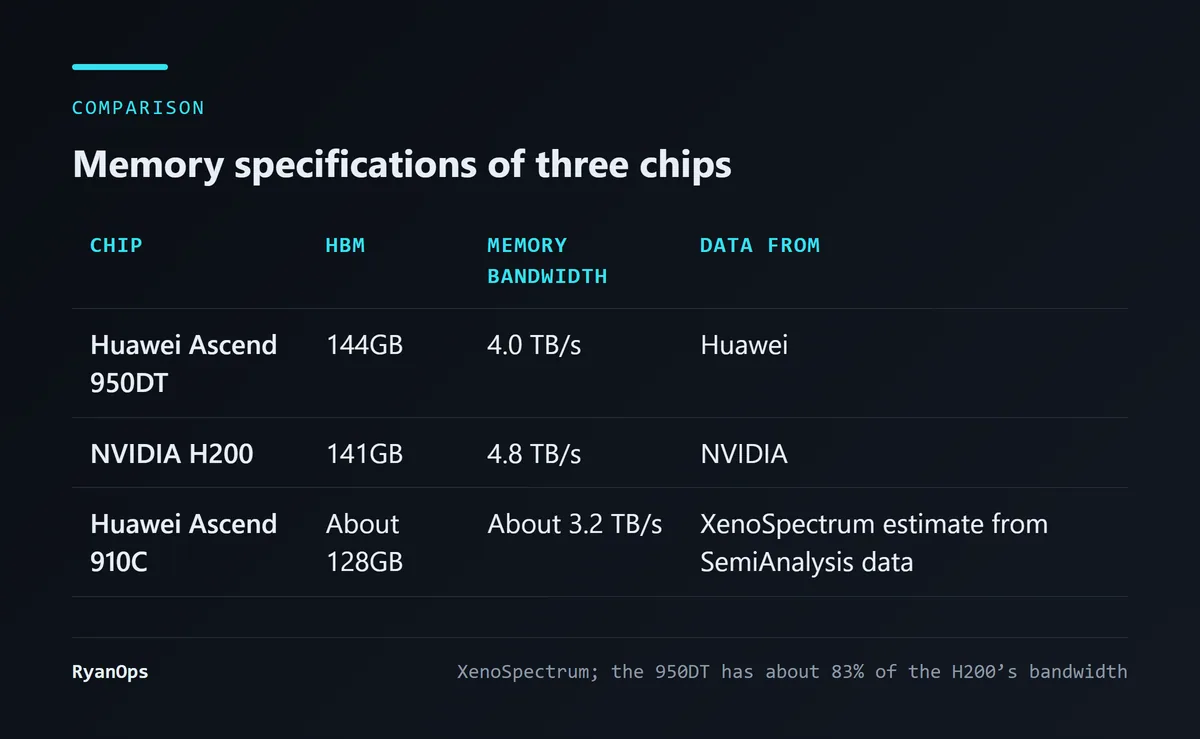 Figure 2: The 950DT has slightly more memory than the H200 and about 83% of its bandwidth (data: XenoSpectrum)
On this table alone, the 950DT sits in the same class as the H200, the NVIDIA chip conditionally cleared for sale to China: 144GB against 141GB of capacity, 4.0 against 4.8 in bandwidth. Inference means loading a trained model into memory and reading it out again and again, so capacity and bandwidth are the most direct bottlenecks, and the 950DT has enough of both.
Training is a different matter. It means wiring thousands of chips into one machine and running it for weeks, which requires a mature software stack, stable interconnects and debugging tools. DeepSeek has been burned here before. The Financial Times reported in August 2025 that DeepSeek tried to train its next-generation model on Huawei Ascend chips, ran into trouble, and went back to NVIDIA. Restricting the 950DT to inference avoids the part already known to hurt.
There is something here I cannot verify and should say plainly: every number in the table is a vendor specification. The 950DT has not shipped, and I could not find any third-party test of it. I do not know its throughput, power draw or yield under real workloads. Similar specifications do not guarantee similar performance.
How big is 160,000 chips?
Putting 160,000 on a few different yardsticks tells you more than the number alone. I calculated the table below myself; the underlying figures all come from the two sources above.
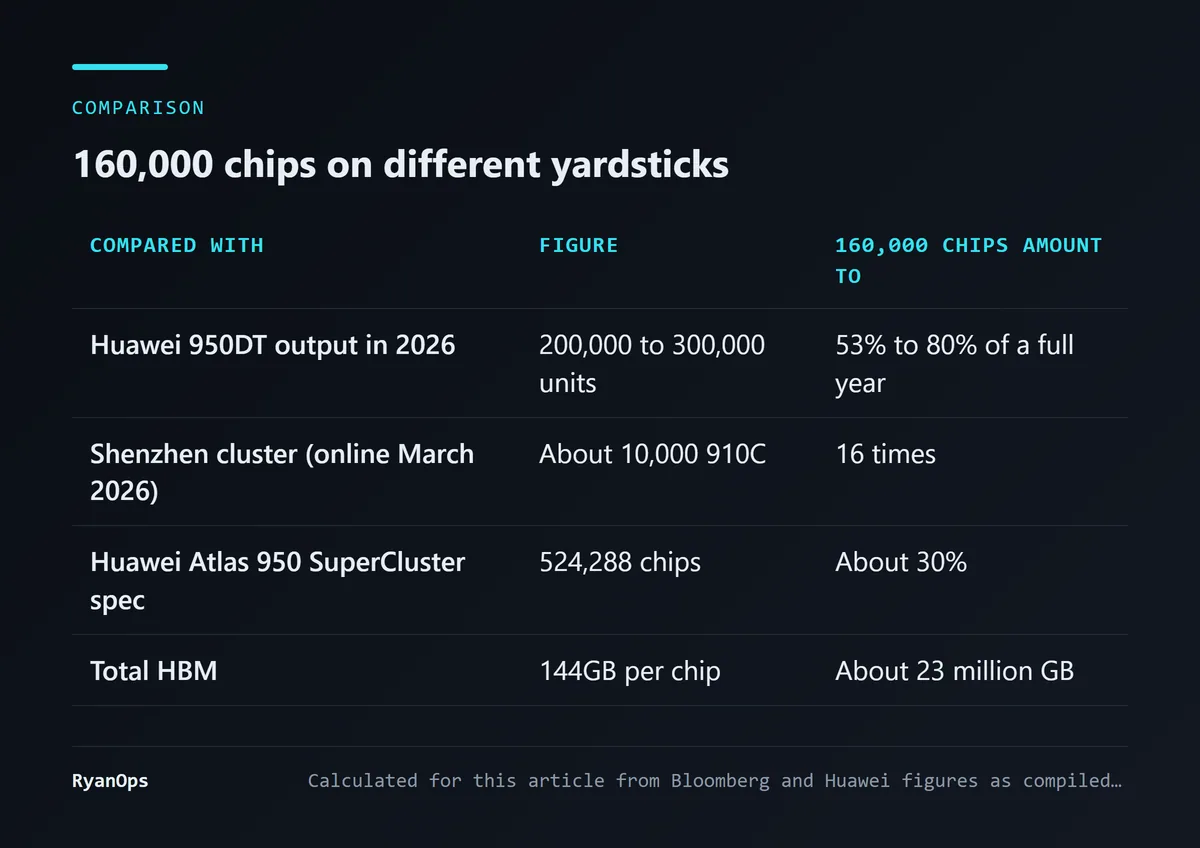 Figure 3: Four ways to measure the same number (calculated for this article; underlying figures from XenoSpectrum)
The first row matters most. The estimate XenoSpectrum cites is that Huawei can produce 200,000 to 300,000 950DT chips in 2026, which makes 160,000 equal to 53% to 80%. Mobile World Live is vaguer and says only “low hundreds of thousands”. The two do not match exactly, but the conclusion is the same: a single order from a single company would absorb most of a year’s output of this chip, while Huawei has other customers to supply. “Delivery could take more than a year” and “asked Beijing to help” stop looking strange next to that ratio.
The second row is a historical comparison. The Shenzhen cluster that went online on March 26, 2026 used about 10,000 of the previous-generation 910C, and it was treated as a large Huawei deployment at the time. 160,000 is 16 times that.
The third row is Huawei’s own ambition. The Atlas 950 SuperPoD that Huawei designed for the 950 series holds 8,192 chips, and 64 of them form a SuperCluster of 524,288. DeepSeek’s plan is about 30% of that theoretical ceiling.
The fourth row returns to the heart of the supply problem. At 144GB per chip, 160,000 chips add up to about 23 million GB of HBM. The reason the reports give for Huawei’s limited output is precisely a shortage of advanced memory. For how tight HBM is worldwide, see this site’s piece on 2027 memory being sold out. Chinese vendors face export controls on top of that, which only makes their position tighter.
When did Jensen Huang say that?
The old headline read “NVIDIA’s CEO says the China market has basically been handed to Huawei, and DeepSeek then spends $2.6 billion”, joining two events into cause and effect. The order of events is right, but the gap and the context were flattened.
 Figure 4: eWeek’s report on Huang’s remark, dated May 22, 2026 (source: eWeek)
According to eWeek, Huang said it in a CNBC interview on May 21, 2026. His words were “We’ve really largely conceded that market to them.” In the same interview he also said demand in China is quite large. The remark came three and a half months before the DeepSeek news. It described NVIDIA’s overall position under export controls and had nothing to do with any particular order.
Later numbers bore him out. NVIDIA reported earnings on August 26: H200 shipments to China were under 1% of its $89 billion in data center revenue, and its $108 billion guidance for the next quarter assumes zero contribution from China. On the call, Huang said growth would be a lot higher without the constraints. The brokerage Bernstein forecasts that NVIDIA’s share of China’s AI chip market will fall from about 40% in 2025 to about 8% in 2026, with Huawei taking roughly half.
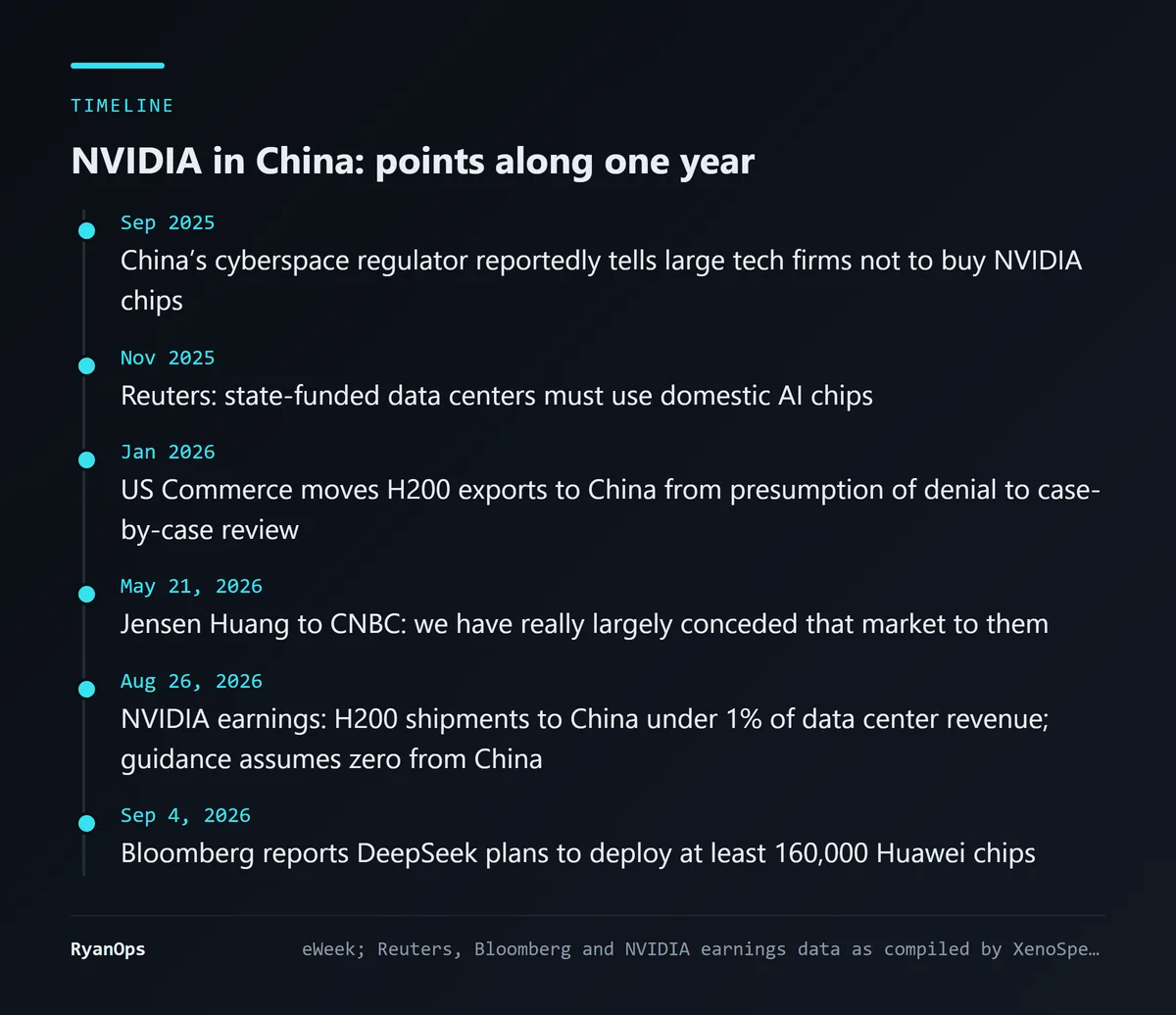 Figure 5: Six points in one year, with the DeepSeek news as the last (data: eWeek, XenoSpectrum)
The timeline shows two forces keeping NVIDIA out. On the US side, the Commerce Department moved H200 exports to China from a presumption of denial to case-by-case review in January 2026. That is a loosening on paper, yet actual shipments are close to zero, as the earnings show. On the Chinese side, the cyberspace regulator reportedly told large tech firms in September 2025 not to buy NVIDIA chips, and Reuters reported that November that state-funded data centers must use domestic chips. How much of DeepSeek’s choice of Huawei is a technical judgment and how much is the only workable option in that policy environment cannot be told apart from public information.
Why build in Ulanqab?
Ulanqab is in central Inner Mongolia, about 350 km from Beijing. The local conditions XenoSpectrum lists are electricity at about 0.35 yuan per kWh, an average annual temperature of 4.3°C, network latency of about 4.2 ms to Beijing, and 89 planned data center projects totalling 12.5GW.
Those numbers fit what an inference data center needs. Inference is a load that never stops, so electricity is the largest operating cost and low temperatures cut the power spent on cooling. It also has to answer users in real time, so it cannot be too far from them, and 4 ms is close enough. A training facility, by contrast, does not care about latency.
As for money, Huang has estimated that a 1GW AI data center costs about $50 billion to build in the United States. Land, power and chip costs all differ in China, so the figure is only an order of magnitude. DeepSeek reportedly raised 50 billion yuan, about $7.4 billion, in its June 2026 round. Set side by side, the two numbers show that 1GW cannot be built on that round alone, which also explains why part of the plan is leased capacity. DeepSeek’s API price changes over recent months, including separate peak and off-peak billing, reflect the same pressure of not having enough compute.
My read, and what would change it
I read this news as a sign that Huawei chips have gained a foothold in inference. It falls short of evidence that China’s AI industry has broken free of NVIDIA. I have three reasons. DeepSeek itself keeps training on NVIDIA. The 950DT has not shipped and has no third-party test. And 160,000 chips would take most of a year of Huawei’s capacity, so how many arrive and how fast depends on memory supply, which Huawei does not control.
What would change my view? On the optimistic side, three things: DeepSeek or another top-tier company saying publicly that it trained a flagship model on Ascend; independent performance and power tests of the 950DT that land close to the vendor’s specifications; or Huawei’s actual shipments clearly exceeding 300,000. On the pessimistic side, two: the order going unconfirmed for a long time or being quietly scaled back; or the US actually clearing H200 sales and Chinese companies rushing back to buy, which would show that Huawei was chosen mainly because nothing else was available.
For ordinary readers, the only effect likely to be felt in the near term is whether DeepSeek’s service becomes less congested at peak hours. On the reported schedule, even if everything goes well, this compute starts coming online at the end of 2027 at the earliest. Do not expect any change before then.
What this rewrite corrected
- The amount is out of the headline. The old version said DeepSeek “spends $2.6 billion”. Bloomberg did not report an amount. The figure comes from a secondary news flash and is an estimate of $16,000 per chip times 160,000 chips, with no reliable source for the unit price.
- The causation is out of the headline. The old version used “then” to tie Huang’s remark to DeepSeek’s order as cause and effect. Huang spoke on May 21, 2026, three and a half months earlier, about NVIDIA’s overall position under export controls.
- “Ordered” became “plans to deploy”. The report’s wording is a plan, the sources are anonymous, and neither DeepSeek nor Huawei has confirmed it.
- The source of the 1GW figure is now separate. It comes from another Bloomberg report on July 30. The old version presented it as part of the September 4 report.
- Limits the old version left out. I have not read the full Bloomberg text behind the paywall and rely on two outlets that relayed it. The 950DT specifications are vendor numbers with no third-party test yet. The two outlets differ slightly on Huawei’s output.
- New material. The ratios of 160,000 chips to Huawei’s annual output, the Shenzhen cluster and the SuperCluster; the background of DeepSeek’s earlier failed attempt to train on Huawei chips; the China numbers from NVIDIA’s August earnings; and the siting conditions in Ulanqab.


